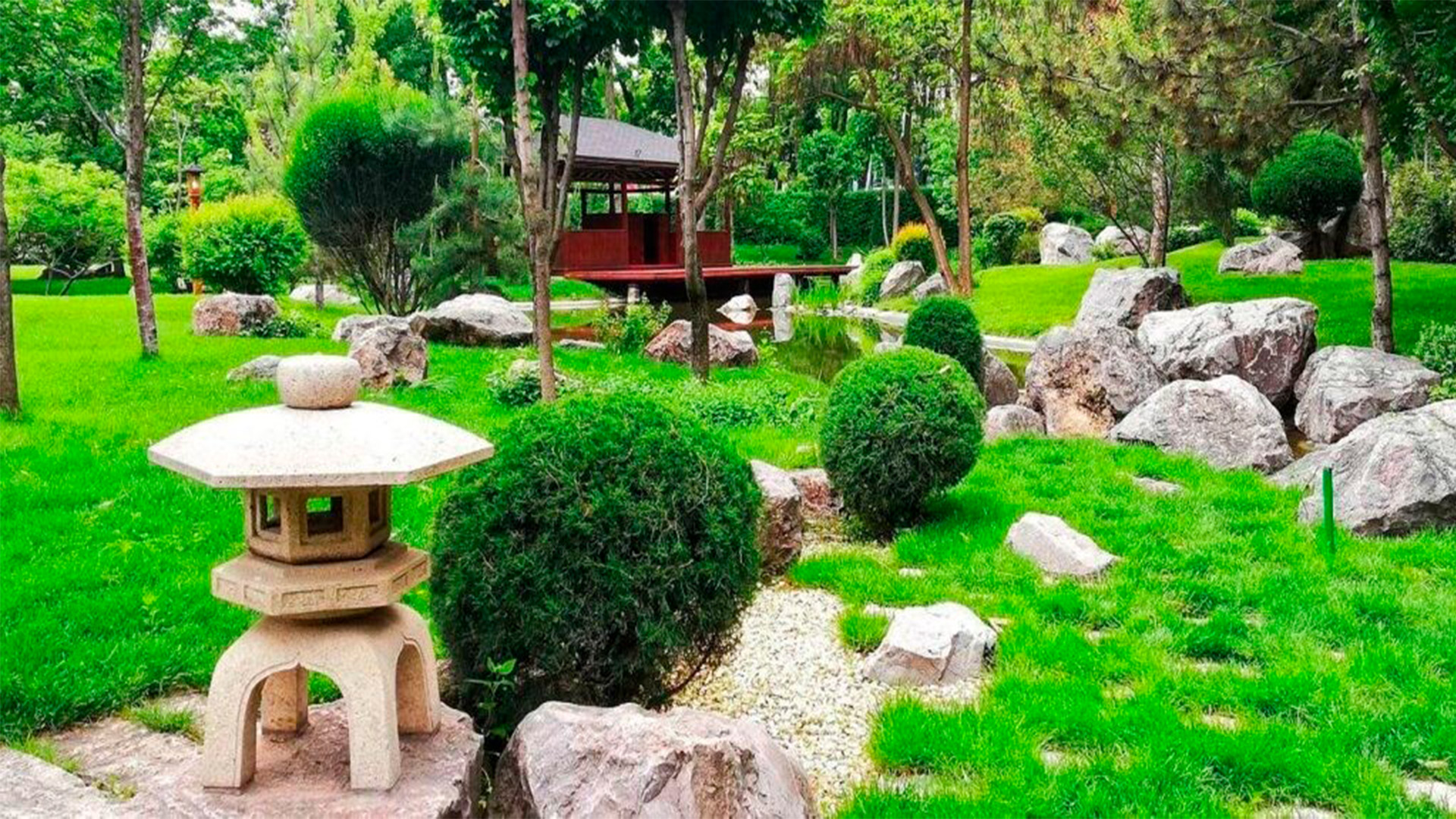
Garden Infrastructure
Philosophy of Japanese Garden
The Japanese Garden in Tashkent embodies a philosophical and cultural concept of the universe in
miniature. Through contemplation, visitors are encouraged to feel their connection to the greater Way
and to perceive themselves as an integral part of the beautiful Universe. Surrounded by the harmony of
the garden, one can gain a deeper understanding of oneself and find inner peace. The contemplation of
the garden inspires the soul and encourages reflection.
The Japanese Garden can be enjoyed throughout the year, as each season reveals its beauty in a unique
way. In designing the garden, its creators adhered to six fundamental principles: simplicity, seclusion,
a sense of antiquity, the flowing nature of water, panoramic views, and the craftsmanship of human
hands.
The garden’s principal elements are Stone and Water, symbolizing Yin and Yang, complemented by plants
and architectural features. Centuries-old Japanese traditions are interwoven with Uzbek culture,
reflecting wisdom, experience, and mystery, as well as the unique relationship between humanity and
nature. Here, people seek to enhance and enrich nature while preserving its essence and respecting its
laws.
The Japanese Garden is not merely a beautiful place for walking and recreation; it is also a reflection
of the divine essence of nature. Its location was carefully chosen. Situated on the shore of a lake, the
garden blends harmoniously into the landscape of the entire park area of JSC NEC “Uzexpocentre.” It is
located adjacent to a children's park and a water park within the recreational and entertainment
complex, and is also in close proximity to the Japanese Center.
The total area of the Japanese Garden is 3.4 hectares.
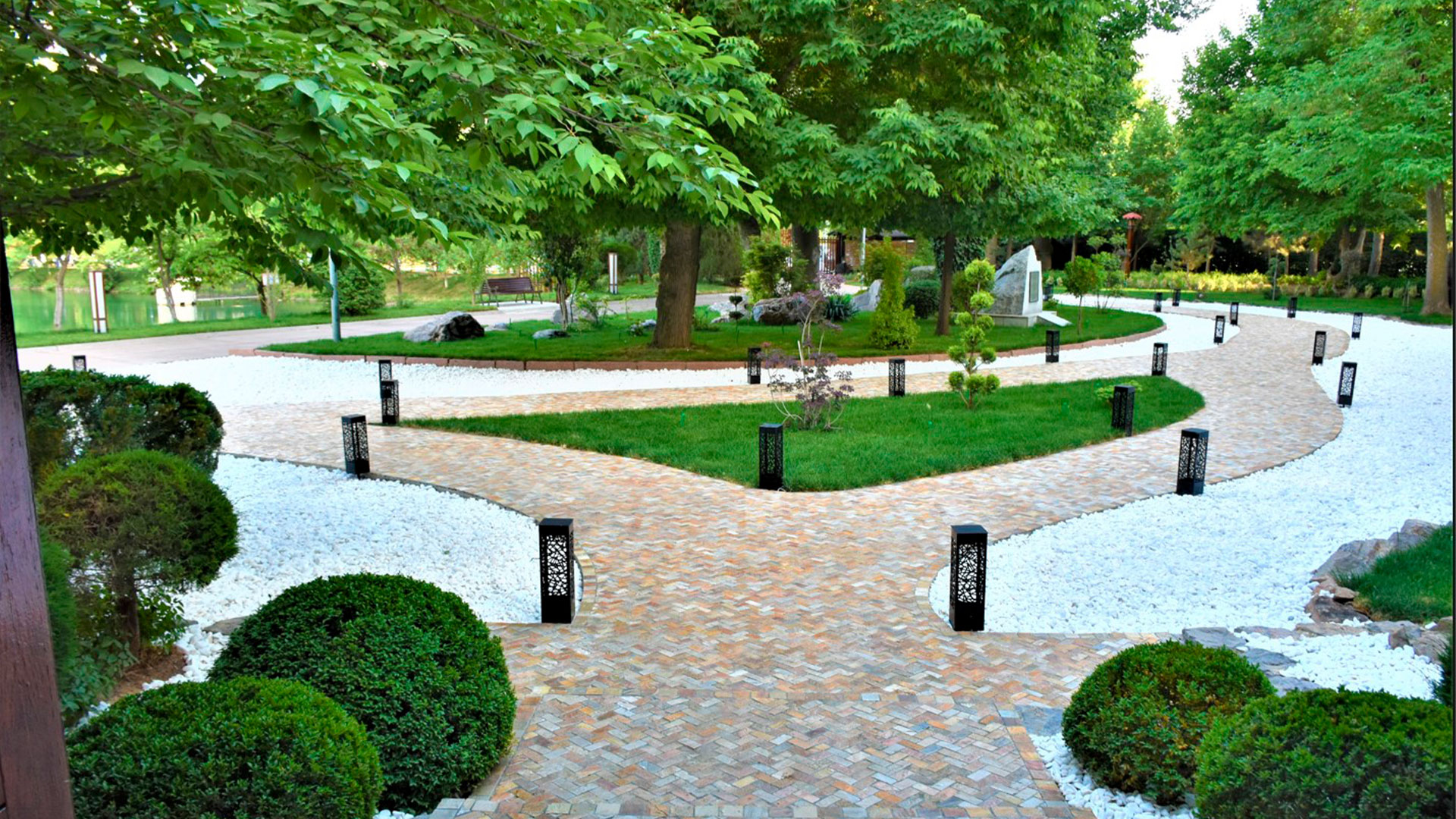
Infrastructure of the Japanese garden:
Stones’ garden (Sekitei)
Sekitei is one of the types of Japanese garden. This type of garden abstractly depicts the beauty of
nature. Stones, as well as water are an integral part of any Japanese garden. For example, the
embodiment of the ocean is white sand without water. This stone garden consists of 15 stones, combined
with figures of 7, 5 and 3 stones. Fifteen signifies the full moon, which creates an exciting atmosphere
in the garden.
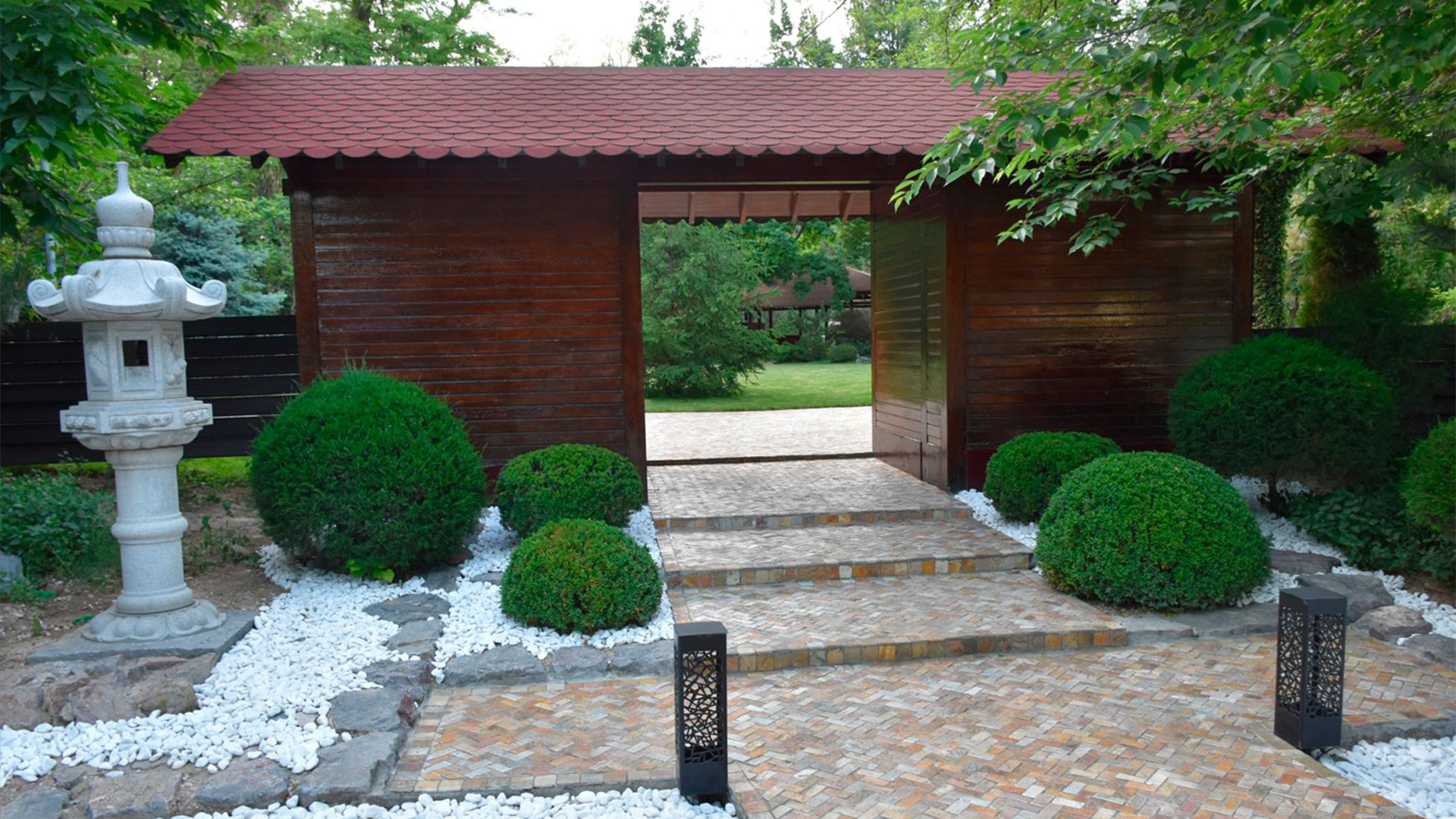
Garden’s Gate (Teimon)
The design and structure of the gate is simple, so that everyone feels simple and calm when entering the
garden. There is stone lantern (Kasugadoro) in front of the gate and paper lantern (Chochin).
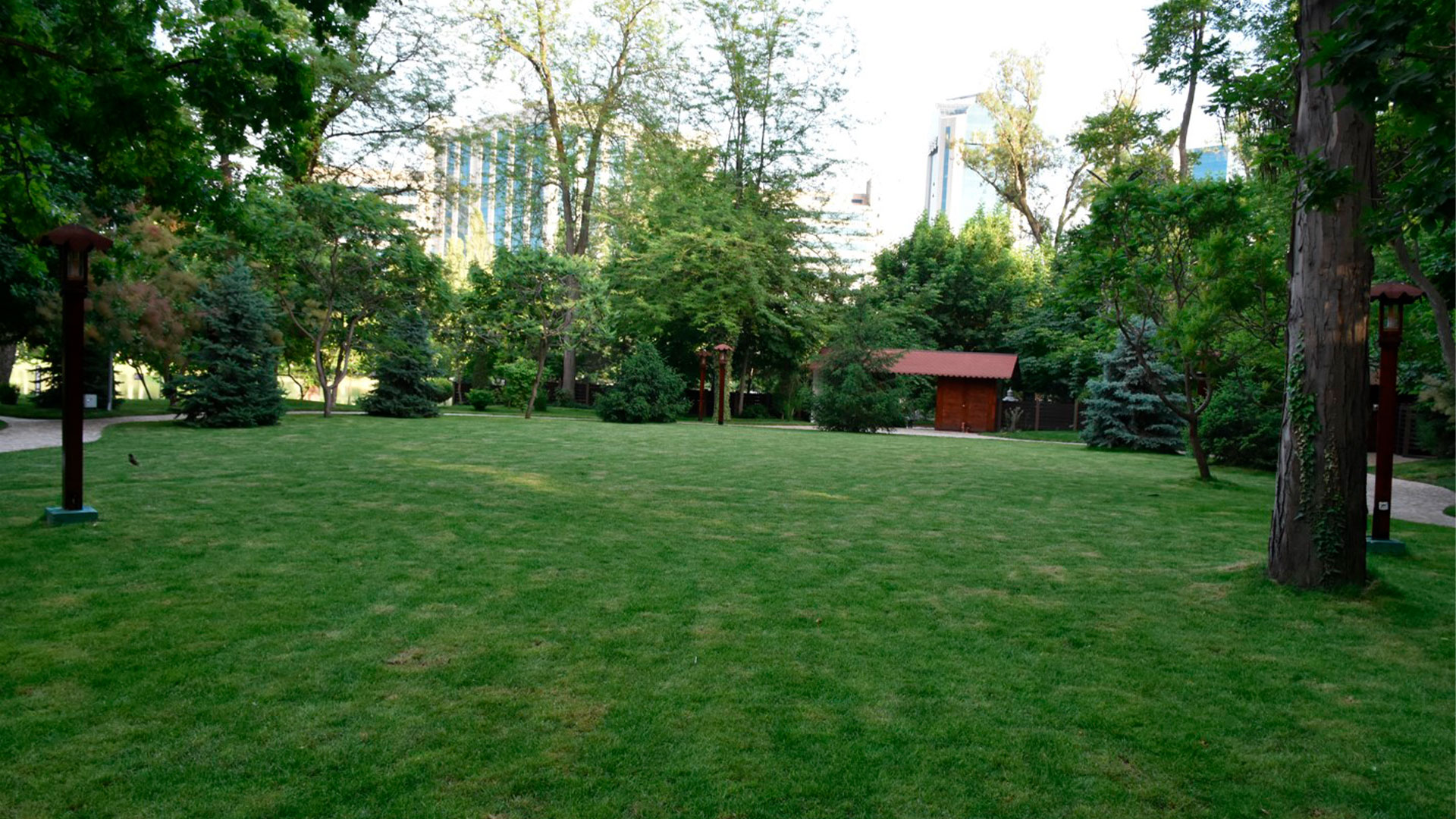
Lawns (Shibaniwa)
Shibaniwa should be located near the southern front of the buildings. In antiquity, various events and
festivals were celebrated on such lawns.
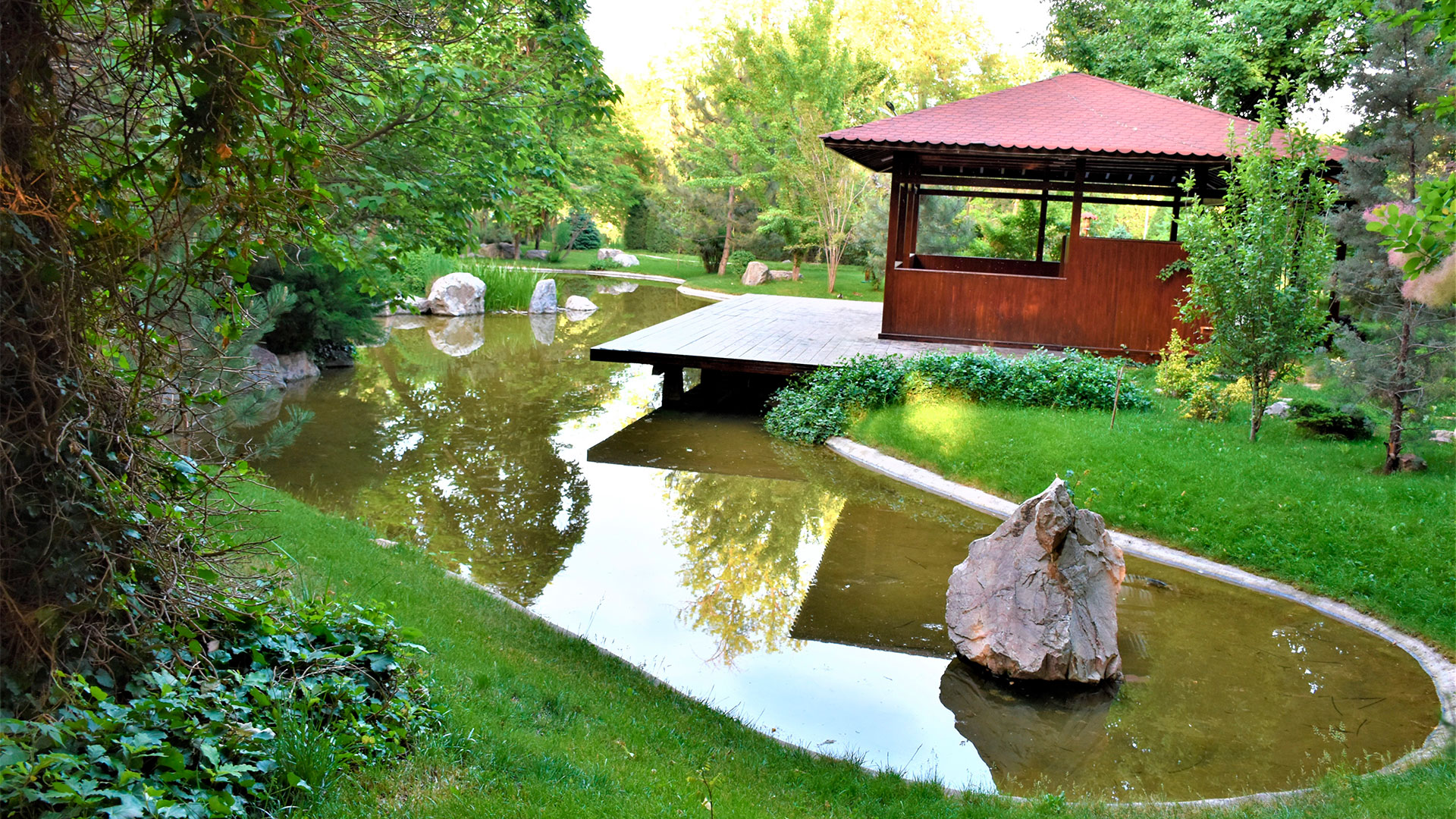
Tea house (Buden)
The purpose of an ancient tradition of drinking tea is to stop internal dialogue and increase awareness.
All this is also relevant to a modern society. During the tea ceremony master reveals the multifaceted
world of tea to the guests. Japanese tea ceremony is like a theatrical performance where guests become a
direct participant. In tea House, in an atmosphere of harmony, respect, purity and tranquility guests
can comprehend the philosophy of Japanese Garden and enjoy delicious tea. It is vital to perform a
ritual ablution (matsuri), before participating in the tea ceremony.
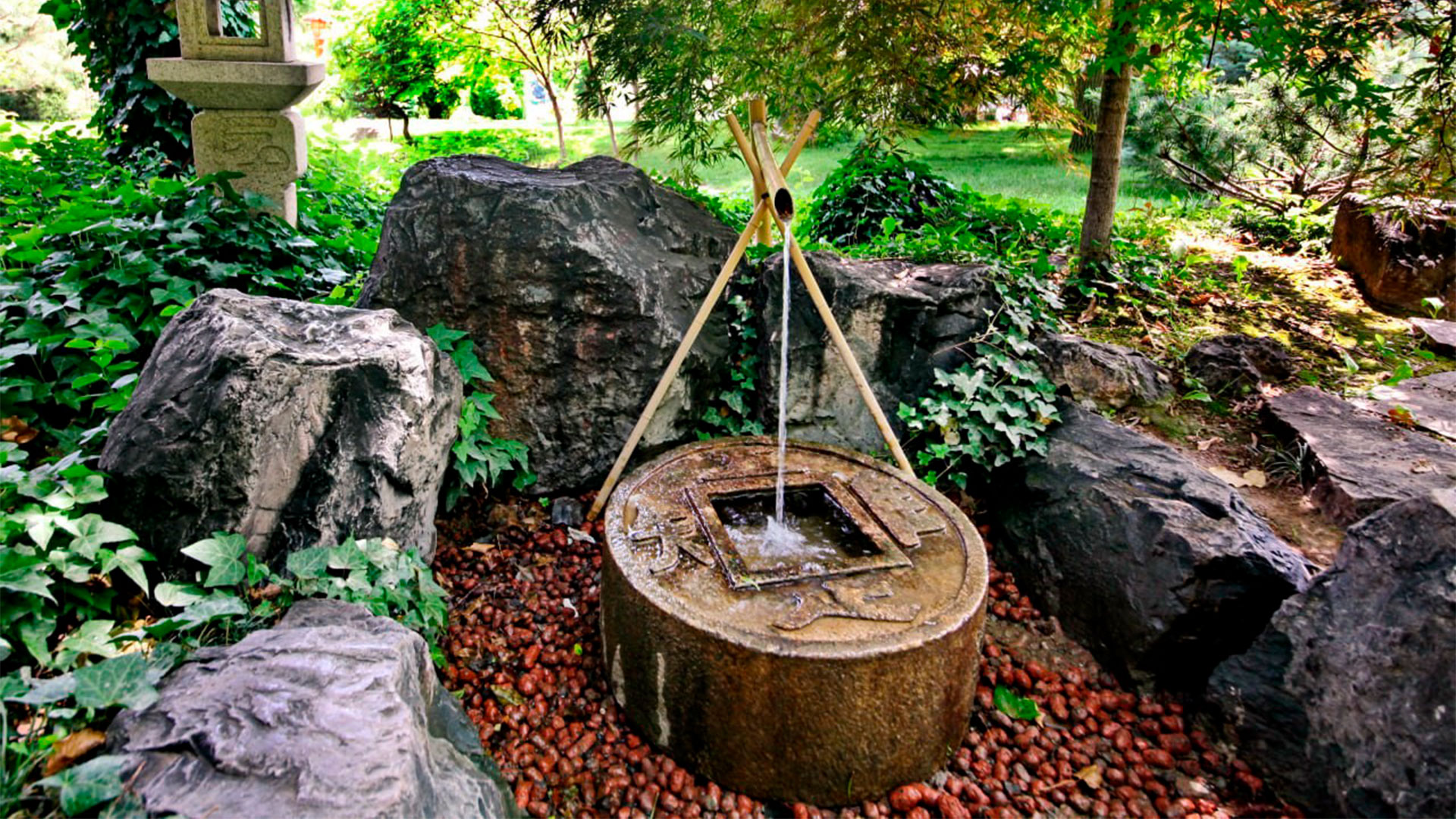
Bowl of water (Tsukubai)
Bowl of water (The Tsukubai) is located at the entrance of Buden. People, after washing their hands at
this bowl, perform a kind of purity ritual in order to take part in the tea ceremony.
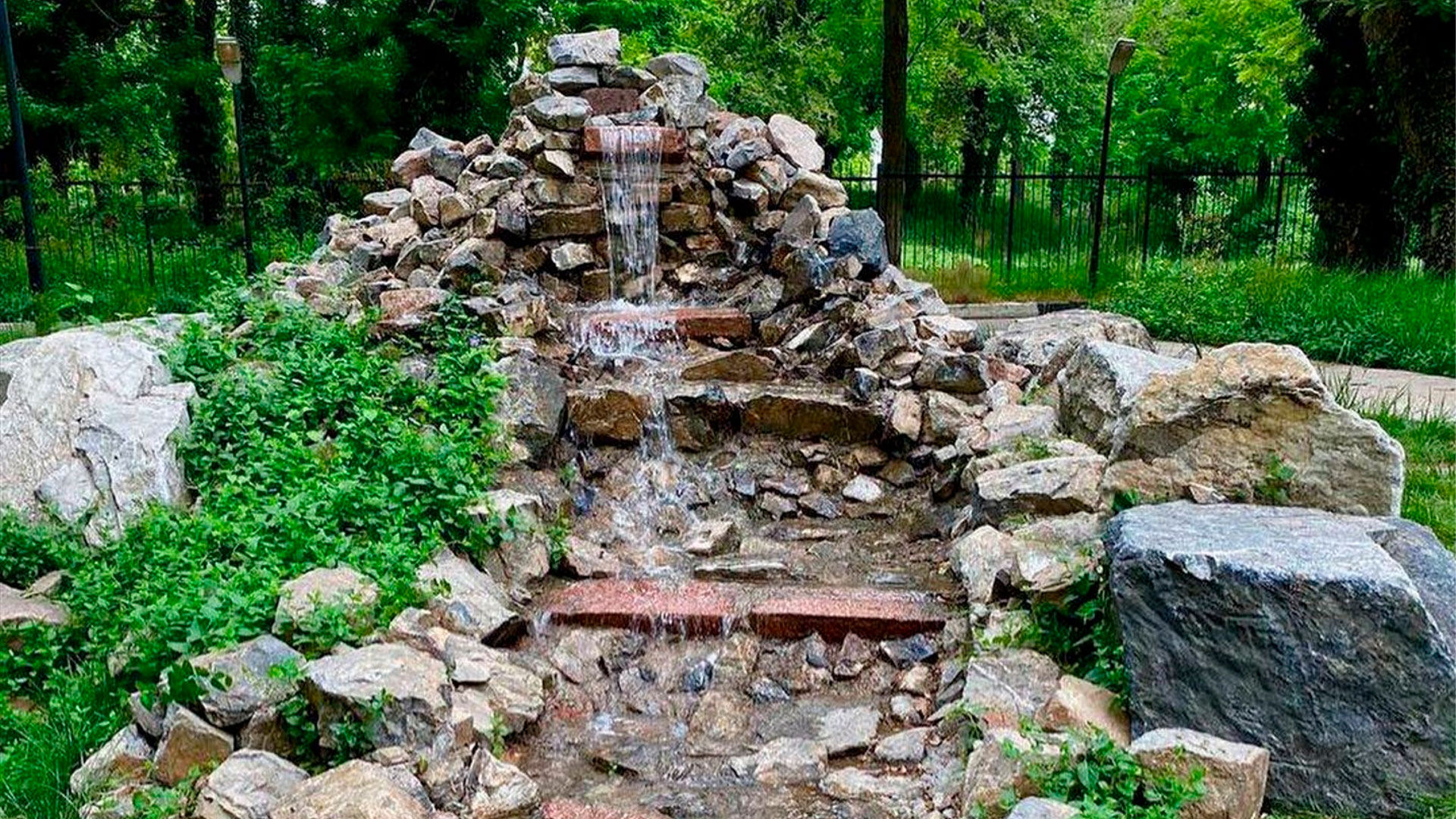
Pond (Ike), Hills (Tsukiyama), Waterfall (Taki), Stone bank (Ishihama), Stone island (Gantou)
Water flows into the pond through a "male" waterfall in the center of the Hills (Tsukiyama) and a
woman-shaped waterfall on the left side of the hill. The outline of the pond gives the appearance of a
seashore, making the curve look like a shore protected by stones, Stone bank (Ishihama) and with Stone
islands. On the Hills (Tsukiyama) there is a row of stones that abstractly represent the rocky mountains
in the distance.
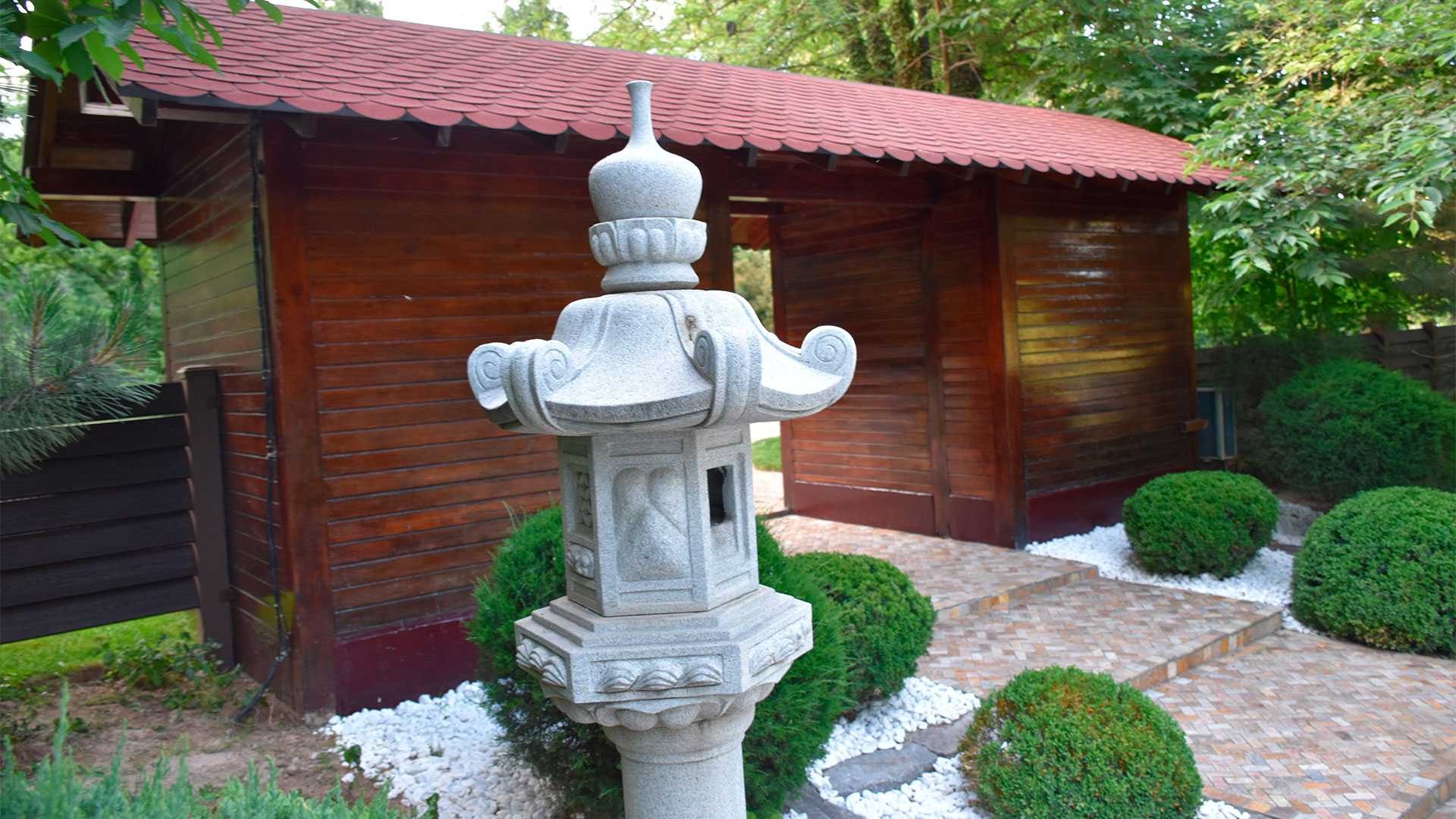
Stone lantern (Yukimidoro)
Yukki means “snow.” This “snow-covered” lantern beautifully highlights the landscape.
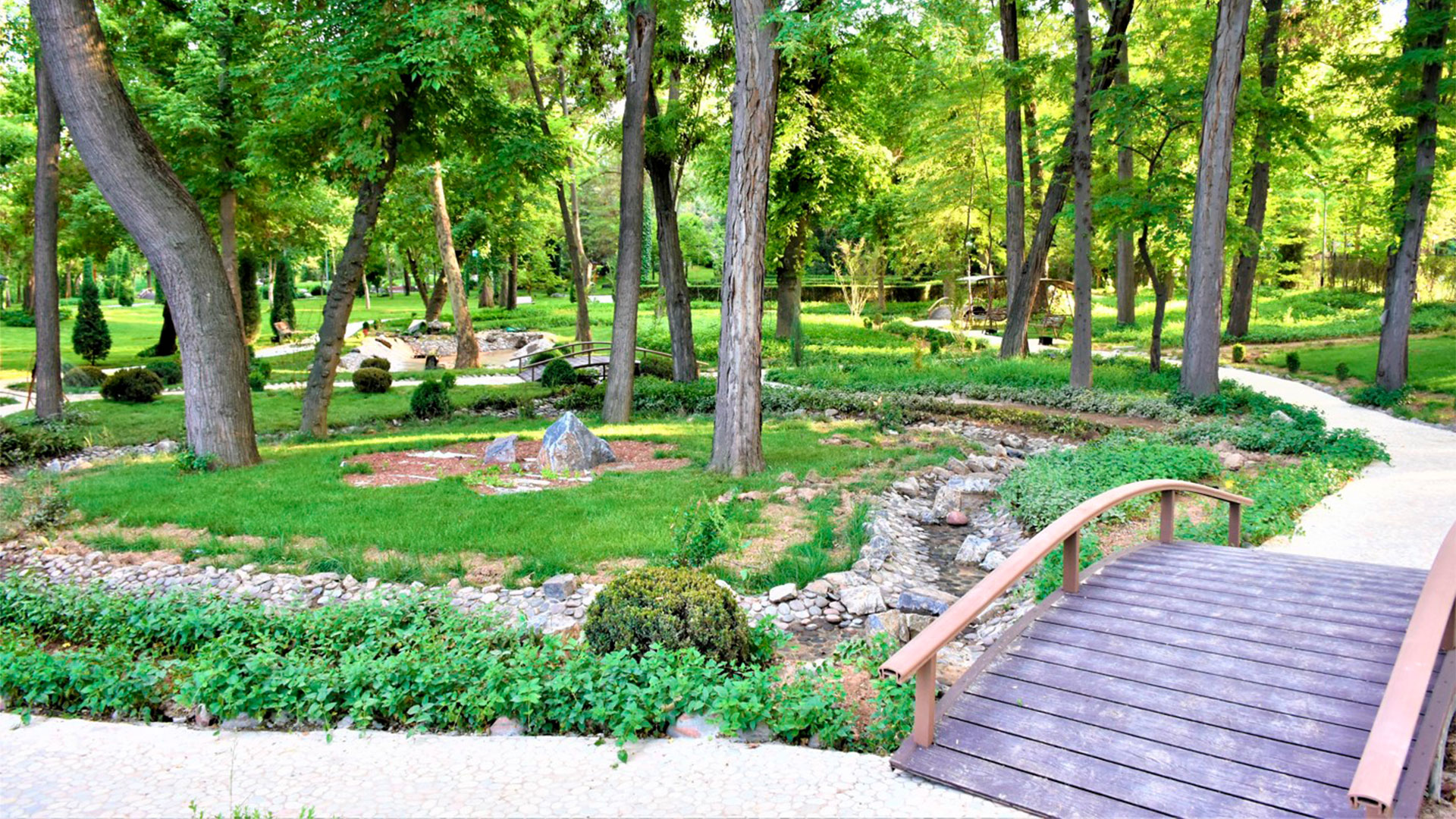
Stream (Nagara), Iris garden, Lotus pond (Hasuike)
Water fills the lotus pond, flowing down the rocks of the stream. Moisture-loving plants planted along
and in the stream itself give the garden a special look. The lotus pond also contains irises, lake reeds
and lotuses. The lotus pond was designed as part of an existing lake and this addition gives the
impression that the lake is part of Japanese Garden itself.
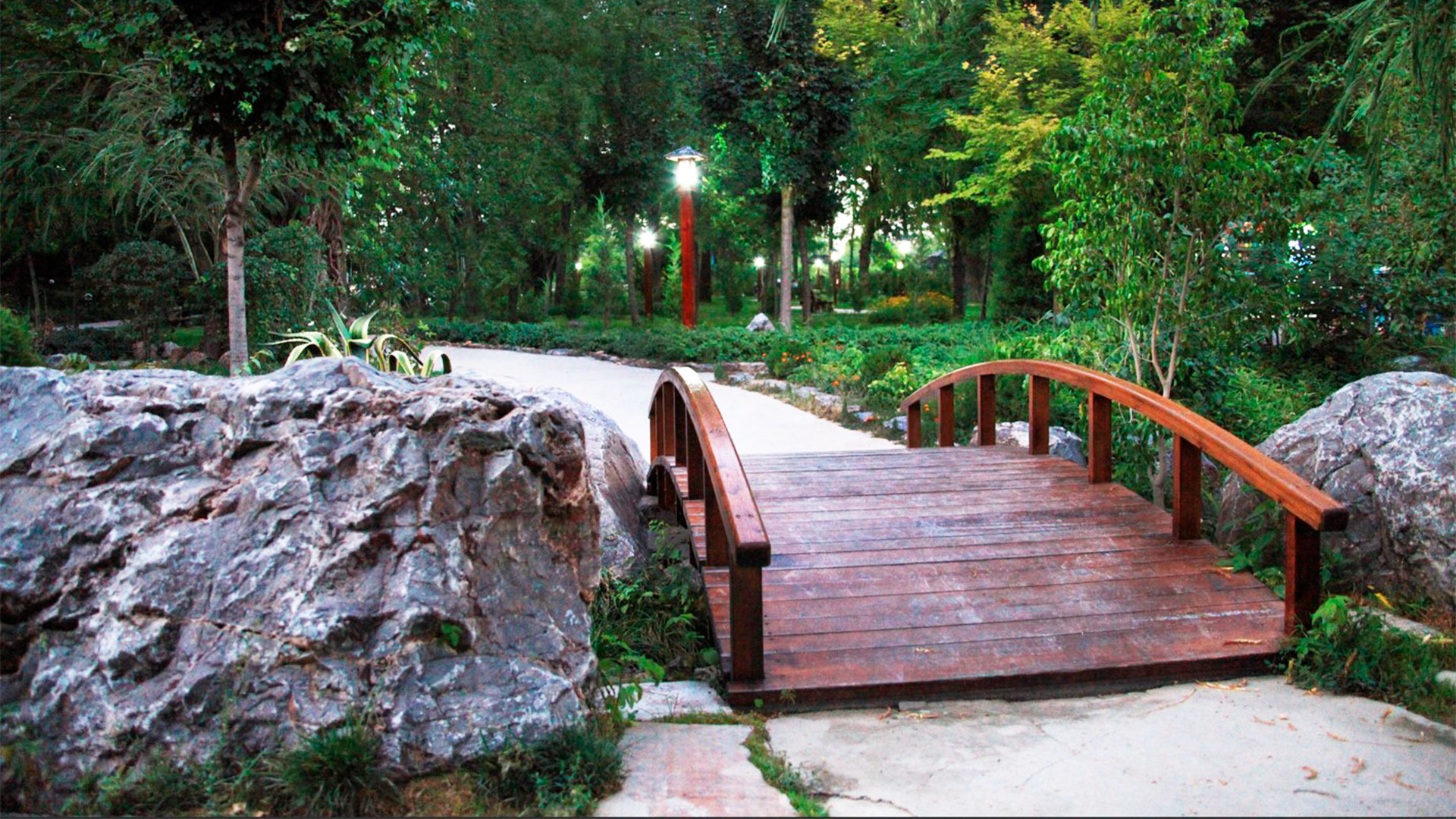
Wooden bridge (Mokkyo)
The pathways connect all the elements mentioned above, and the stream can be crossed via a wooden
bridge. The paths are designed with many curves so that visitors can fully enjoy walking through the
garden. Visitors can also enjoy the sound of footsteps on the gravel and the changing colors of the
stones after they are sprinkled with water.
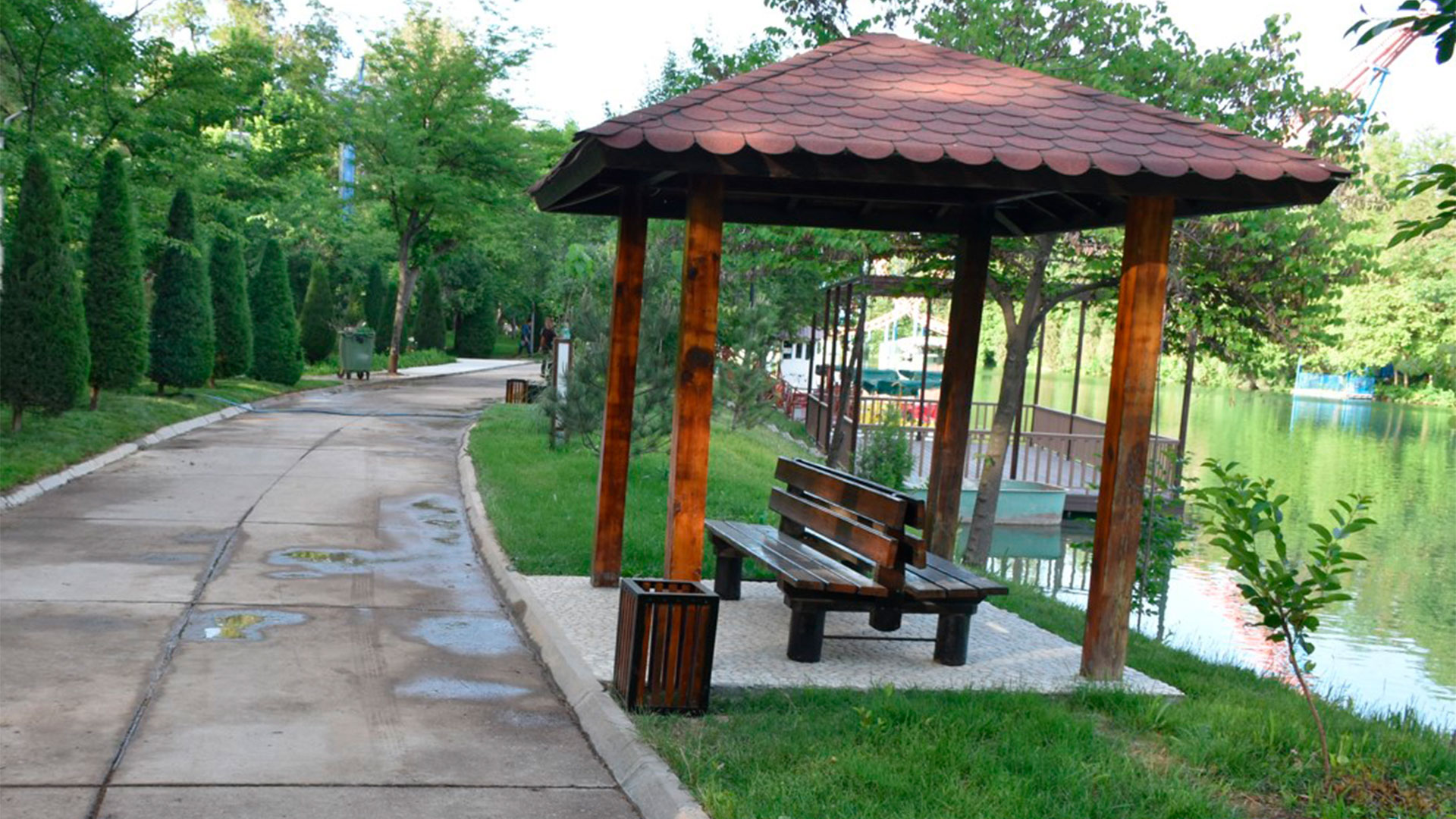
Summer-Houses (Azumaya)
Summer-Houses are traditional Japanese structures designed for rest and contemplation of nature. They
create
a cozy space where visitors can stop, relax, and enjoy the peaceful atmosphere of the garden.